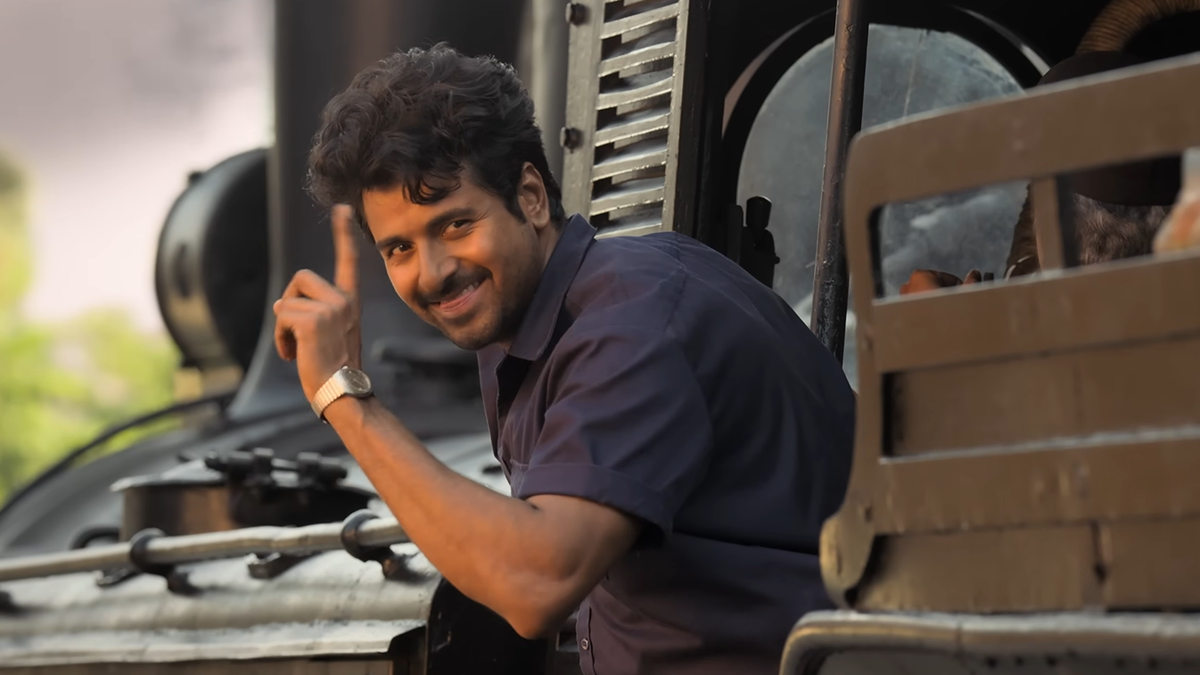
Sudha Kongara’s film has been criticised by the Congress on the grounds that it misrepresents facts and advances non-existent conspiracies to prop up its narrative
Billed as the DMK’s film for the election season, Sudha Kongara’s Parasakthi, whose title is borrowed from the “quintessential DMK film” of the same name written by former DMK president M. Karunanidhi, has been slammed by none other than the DMK’s political ally, Congress, on the grounds that it misrepresents facts and advances non-existent conspiracies to prop up its narrative.
Cinema has always been more than entertainment in India—it is a reflection of society, politics, and cultural transformation. Few films embody this truth as powerfully as Parasakthi (1952), a landmark Tamil movie that blurred the boundaries between cinematic fiction and social reality. Even decades after its release, Parasakthi continues to spark discussion for the way it challenged traditions and echoed real-life struggles.
A Film That Redefined Tamil Cinema
Directed by Krishnan–Panju and written by M. Karunanidhi, Parasakthi was not just a film; it was a statement. At a time when Tamil cinema was dominated by mythological stories and melodrama, this movie dared to focus on social injustice, rationalism, and human suffering.
The narrative follows a war veteran returning to a society riddled with hypocrisy, exploitation, and inequality. While the story unfolds on screen, the emotions and conflicts portrayed were deeply rooted in real societal conditions of post-independence India.
Reel Characters, Real Struggles
What made Parasakthi revolutionary was its realistic portrayal of common people. The characters were not idealized heroes but flawed individuals battling poverty, hunger, and moral dilemmas. Issues such as:
- Exploitation of the poor
- Blind faith and religious hypocrisy
- Women’s suffering in patriarchal structures
- Class inequality
were boldly addressed, making audiences uncomfortable yet deeply engaged.
This realism created a strong connection between the reel world and the real world, forcing viewers to reflect on their own beliefs and societal norms.
Dialogues That Shook Society
One of the most powerful aspects of Parasakthi was its dialogue. Sharp, thought-provoking, and unapologetically bold, the film’s words resonated far beyond cinema halls. These dialogues were not mere scripts; they echoed contemporary political and social ideologies, giving voice to reformist ideas.
The impact was so strong that the film became a cultural reference point, proving that cinema could influence public thought and social discourse.
The Political and Cultural Impact
Parasakthi also marked the intersection of cinema and politics. The themes reflected the rise of rationalist movements in Tamil Nadu and questioned age-old practices. This led to both admiration and controversy, highlighting the tension between tradition and progress.
The tussle between the reel and the real became evident as reactions to the film mirrored real societal divisions—supporters praised its honesty, while critics viewed it as disruptive.
Why Parasakthi Still Matters Today
Even in today’s digital age, Parasakthi remains relevant. The film reminds us that cinema can be a powerful medium for social commentary. Many of the issues it raised—social inequality, misuse of power, and moral responsibility—are still part of modern conversations.
Its legacy lies in proving that meaningful storytelling can transcend time and continue to influence generations.
Conclusion
Parasakthi is more than a classic film; it is a mirror held up to society. The tussle between the reel and the real in this movie is what makes it timeless. By blending powerful storytelling with social realism, Parasakthi redefined the role of cinema and left an indelible mark on Indian cultural history.